
For decades, Holbein has been a revered name in the global art community, frequently whispered in design schools and celebrated by top-tier illustrators. Based in Japan, Holbein produces what many consider the absolute gold standard of opaque watercolor. But in a modern art market completely flooded with new mediums and budget alternatives, does this traditional designer gouache still hold its own?
Start with the sensory experience of painting: You squeeze out a dollop of fresh paint, touch a damp brush to it, and sweep it across your cold-pressed paper. But instead of the rich, velvety stroke you imagined, the paint lays down streaky, chalky, and dries to a frustratingly dusty finish. If you’ve ever experimented with cheap, student-grade paints, you know the absolute heartbreak of muddy mixtures and uncooperative textures.
In this comprehensive review, we’ll dive deep into what makes Holbein Artists’ Gouache so special. We will explore its unique, filler-free formulation, its massive color range, and why upgrading to professional gouache might just completely transform your painting process.
What Sets Holbein Artists’ Gouache Apart?
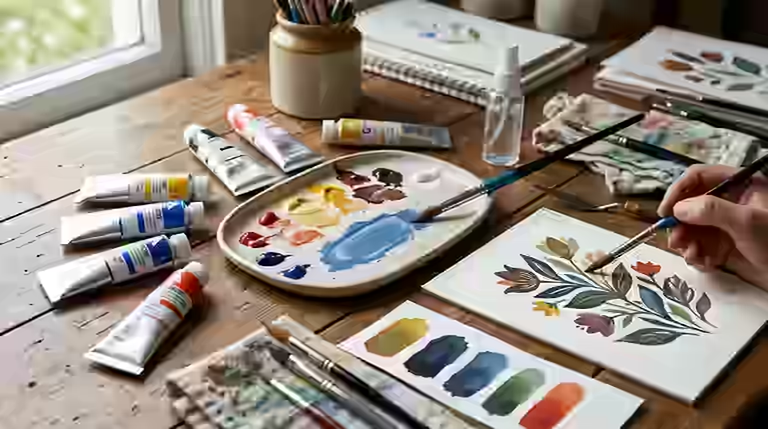
There’s a clear reason professional artists are fiercely loyal to Holbein. It’s not just about brand prestige; it comes down to the meticulous chemistry and manufacturing process of the paint itself.
Zero Opacifiers or Chalky Fillers
One of the biggest misconceptions about gouache is that it’s simply watercolor with white chalk added to make it opaque. While that might be true for bargain brands, professional gouache operates on an entirely different level. Holbein adds absolutely zero opacifying agents—like chalk (PW18)—to their artists’ gouache as cheap fillers.
Instead, the opacity comes purely from an incredibly high pigment load. Because there are no dusty fillers to muddy the waters, the colors remain intensely vibrant, clean, and saturated, even when you mix them. This means that some colors (like certain yellows or magentas) will naturally lean semi-transparent, simply because that is the physical nature of the raw pigment. If you want maximum opacity, you can easily add a touch of Holbein’s Titanium White (PW6), which provides streak-free, solid coverage without making your paint look pastel or dull.
The Perfect Creamy Consistency
If you’ve struggled with gouache separating in the tube—squirting out a puddle of clear, sticky binder before you get to the actual paint—you’ll appreciate Holbein’s highly stable formulation. Holbein Artists’ Gouache has a famously firm yet silky, paste-like consistency. It suffers from significantly less binder separation than many of its European competitors, remaining shelf-stable for years.
When you touch a damp brush to it, it flows effortlessly. There is virtually no brush drag, making it a dream for illustrators who need to lay down large, flat washes of color or execute precise, sweeping linework for architectural renderings or character designs.
A Flawless Velvet Matte Finish
Traditional gouache should dry to a completely matte, non-reflective finish, and Holbein delivers this beautifully. When you look at a dried Holbein painting, the surface absorbs light rather than reflecting it, giving the artwork a velvety, rich appearance that photographs perfectly without any glare. This is exactly why it has been historically favored as a “designer gouache” for commercial illustration, animation backgrounds, and high-quality print reproduction.
Exploring the Massive Color Range
When it comes to variety, Holbein doesn’t hold back. The standard line of Holbein Artists’ Gouache features a whopping 89 colors, typically available in 15ml tubes. This vast range includes single-pigment staples, reliable lightfast options for gallery artists, and time-saving convenience mixtures that designers and graphic artists adore.
The Magic of the Irodori Line
As if 89 colors weren’t enough, Holbein expanded their catalog with the wildly popular Irodori collection. This specific line consists of 48 additional colors inspired by the four seasons of Japan (Spring, Summer, Autumn, and Winter). The Irodori paints maintain the exact same professional quality, opacity, and binder as the standard line but offer highly unique, desaturated, and earthy hues. If you love painting moody landscapes, delicate botanicals, or muted historical illustrations, the subdued greys, soft siennas, and rich greens of the Irodori line are incredibly inspiring.
The Best Way to Start: The Primary Mixing Set
Staring at a wall of 130+ individual colors at the art supply store can be intimidating (and extremely expensive). If you are new to the brand, the absolute best investment you can make is the Holbein Artists’ Gouache Primary Set of 5.
This brilliant, compact set contains 15ml tubes of:
- Primary Magenta (PR122)
- Primary Yellow (PY3, PY74)
- Primary Cyan (PB15)
- Primary Black (PBk7)
- Primary White (PW6)
Because these specific paints are so highly pigmented and free of cloudy fillers, you can mix almost any color on the visible spectrum using just these five tubes. It’s an exceptional tool for mastering color theory without the risk of creating muddy browns and grays.
Traditional Gouache vs. Acryla Gouache: What’s the Difference?
A common point of confusion for beginners is the difference between Holbein Artists’ Gouache and Holbein Acryla Gouache. While both are fantastic mediums manufactured by the same company, they behave entirely differently.
- Holbein Artists’ Gouache (Traditional): This line is bound with gum arabic and dextrin, exactly like traditional watercolor. Because of this, it is highly rewettable. Even after it dries completely on the paper or in your palette, you can reactivate it with a wet brush. This allows for gorgeous, soft blending on the paper, but it also means you must be careful when layering so you don’t accidentally lift the paint underneath.
- Holbein Acryla Gouache: This is essentially an acrylic paint that dries to a matte, gouache-like finish. Its binder is an acrylic polymer. Once it dries, it is completely waterproof. You cannot reactivate it on your palette to save paint for later, but you can effortlessly paint unlimited layers on top of each other without ever disturbing your base layers.
Make sure you know which one you are picking up! If you want the traditional, blendable experience, look for the “Artists’ Gouache” label.
Pros and Cons of Holbein Artists’ Gouache
To keep things balanced, let’s look at the objective pros and cons of investing in this professional-grade opaque watercolor.
The Pros:
- Incredible Pigment Density: A little paint goes a incredibly long way, meaning the 15ml tubes actually last much longer than cheaper budget brands.
- Rewettability: It can be left to dry in an airtight palette and easily revived days, weeks, or even months later with a simple spritz of water.
- No Chalky Fillers: Zero chalk residue means you get clean, brilliant color mixes every single time.
- Shelf Stability: The buttery, firm consistency is highly resistant to binder separation inside the tube.
- Mixed Media Magic: Plays beautifully alongside standard transparent watercolors, colored pencils, and ink.
The Cons:
- The Investment: While reasonably priced compared to luxury European brands, it is still a significant step up in cost from student sets.
- Variable Opacity: Because there is no added chalk, some colors (like magenta or certain yellows) are naturally semi-transparent out of the tube. You must mix them with a touch of white to achieve full flat opacity, which can occasionally frustrate beginners expecting absolute coverage instantly.
- Delicate Layering Required: As a traditional gum arabic gouache, it requires a light touch and proper water control when layering to avoid muddying the underlying colors.
Tips for Painting with Holbein
Want to get the absolute most out of your paints? Here are a few professional tips for working seamlessly with Holbein gouache:
- Keep a Big Tube of White on Hand: You will go through white paint significantly faster than any other color, as it is essential for adjusting opacity and creating light pastel tints. Holbein sells their Titanium White (PW6) in an economical, oversized 60ml tube. Grab one—it’s also the perfect opaque white for adding crisp highlights over your traditional transparent watercolor paintings!
- Use an Airtight Palette: Because traditional gouache can eventually crack, crumble, and fall out if left to dry completely in open plastic pans, squeeze your paints into an airtight, sealable palette. A quick mist of tap water from a spray bottle right before you start working will bring the creamy consistency right back to life.
- Test Your Opacity Before You Paint: Take a piece of scrap watercolor paper and draw a thick line with a permanent black marker. Swatch your colors over the black line. This will immediately show you which pigments are naturally, fully opaque (they will completely hide the sharpie line) and which are semi-transparent (the line will peek through).
- Work from Lean to Thick: Always start your painting with thin, watery washes to block in your initial shapes and establish your values. As you progress, gradually use less water and more paint. Save your thickest, driest, and most opaque applications of paint for your final, popping highlights.
Conclusion: Is Holbein Artists’ Gouache Worth?
In a word: absolutely.
Whether you are a commercial illustrator doing graphic design work, an urban sketcher capturing vibrant cityscapes, or a fine artist looking to elevate your mixed-media pieces, Holbein Artists’ Gouache offers a painting experience that is remarkably hard to beat. The distinct lack of cheap fillers ensures that your art will remain vibrant, clean, and professional, while the dreamy, creamy consistency takes all the physical frustration out of the painting process.
It is an investment in your craft, yes. But because of the immense pigment load packed into each drop, those little tubes will stretch far longer than you might expect. If you’ve been fighting a losing battle against streaky, chalky, uncooperative paints, upgrading to Holbein will feel like taking a massive breath of fresh air.
Ready to upgrade your palette? Consider starting with the Holbein Primary Set to master your color mixing, or treat yourself to a few tubes of the highly unique Irodori seasonal colors. Grab your favorite synthetic watercolor brushes, squeeze out some fresh paint, and experience the velvety matte magic for yourself!
Where to Buy
You can check the current pricing from amazon store and grab your box through the link: Buy the Holbein Artists’ Gouache on Amazon.
Disclaimer: The purchase links above are affiliate links, meaning we may earn a small commission at no additional cost to you if you decide to make a purchase. Thank you!